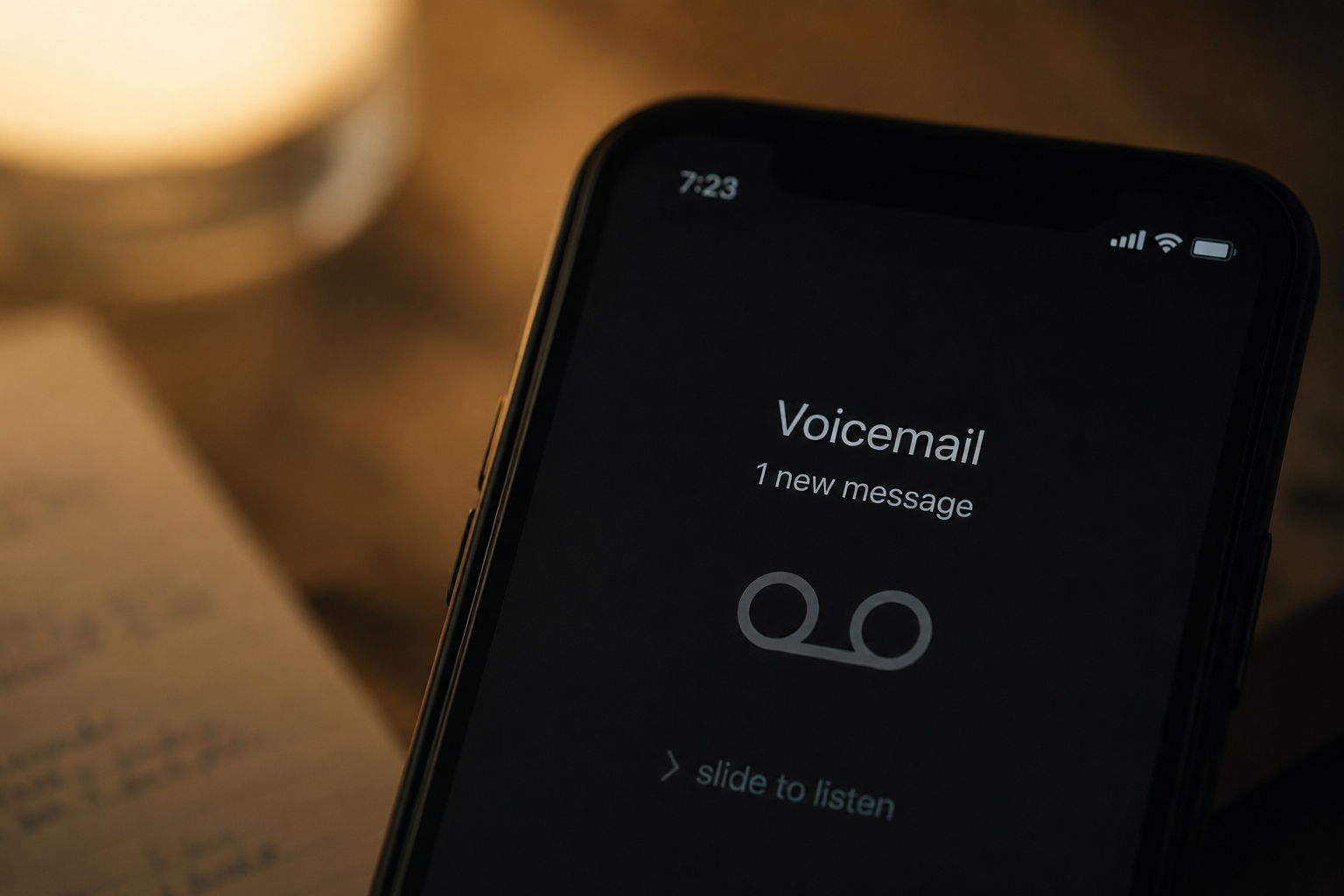
A few years ago, my uncle sent me a voice note before he was killed in Nigeria.
I still replay that recording sometimes. There is something about hearing the voice of someone who no longer exists in the physical world that no photograph or text thread can replicate. A voice carries more than information. It carries cadence, humor, the specific rhythm of how someone pauses before making a point. It feels alive in a way that nothing else quite does.
For a long time, that recording gave me comfort.
Then I started thinking about something that unsettled me. The memory was frozen. I could replay the same sentences forever, but I could never ask a new question. I could never hear a new story. I could never get past the boundaries of that one short recording into the deeper parts of who he actually was. He was right there in my phone and completely out of reach at the same time.
That thought stayed with me for years.

The Question That Became EchoVault
As AI systems became more conversational and more capable of modeling how people think and communicate, I started wondering whether memory preservation itself was about to change permanently. For most of human history, we preserved people through photographs, journals, letters, and recordings. Each generation developed slightly better ways to hold onto fragments of someone. AI felt like the next step in that progression — not a gimmick, but a genuine shift in what was possible.
That question eventually became EchoVault. Not as a business idea I stumbled into, but as something I needed to exist and had to build myself.
What EchoVault Actually Is
A lot of people initially misread the product, and I understand why. The space attracts a lot of sensational framing.
EchoVault does not resurrect dead people. It cannot reconstruct someone who never consented to being modeled. The entire system is built around a single principle: an Echo is created by a living person, through their own willing participation, over time. The person has to be the one to fill it. That is not just an ethical standard — it is what makes the result accurate. An Echo trained on what someone actually said, believed, and valued is fundamentally different from a simulation assembled from the outside after they are gone.
The way it works in practice is more like a structured conversation than a form. Over time, a person has guided dialogues that surface their memories, opinions, relationships, and personality — the things that make them specifically themselves rather than a generic human. That material builds a memory vault: layered, searchable, and personal. Their voice is captured and cloned from their own recordings. Their likeness is trained directly from video they provide. The result is an Echo that their designated family members — we call them Custodians — can have real conversations with in text, voice, and live video.
The goal is not immortality in any grand sense. The goal is continuity. A preserved way of thinking. A voice that does not disappear entirely when the person does.
You can read more about how this works technically in The Original EchoVault, and what the broader category means in What Is an AI Digital Legacy?
Why the Discomfort Makes Sense
Right now, AI memory preservation makes a lot of people uncomfortable. I understand that completely, and I think the discomfort deserves to be taken seriously rather than argued away.
But it is worth remembering that every major leap in how we preserve memory felt unnatural at first. Photography once seemed uncanny — the idea that you could fix someone’s likeness onto a surface and look at it forever. Recorded audio was eerie to early listeners. Video felt invasive. All of those technologies are now normal parts of everyday life, and we are grateful to have them. The discomfort was real, and it passed.
I am not certain AI digital legacy systems will become socially universal. But I do think humanity is moving toward a future where preserving aspects of identity digitally becomes increasingly accepted, especially as conversational AI becomes more emotionally coherent and more people think seriously about what they want to leave behind.
Most people already leave fragments of themselves online — voice notes, videos, texts, photos, emails. EchoVault is about what happens when those fragments become structured enough to form something that can actually respond.
The Feeling I Want People to Have
When someone opens a conversation with an Echo for the first time, I want the feeling to be peace. Not awe at the technology. Not fear about what it means. Peace — the specific kind that comes from knowing that some meaningful fraction of someone’s perspective, their stories, their personality, is still accessible. That their grandchildren can ask questions they never thought to ask. That the advice does not have to stop.
Not a replacement for a human being. Not a supernatural claim. Preservation. Because human memory has always been fragile. Voices disappear. Entire personalities are lost within a generation or two. Whole ways of seeing the world vanish because no one thought to document them while they still could.
My uncle sent me one voice note. I would give a lot to be able to ask him a question.
EchoVault exists because I do not think that situation has to stay permanent.
Frequently Asked Questions
Who founded EchoVault and why? EchoVault was founded by Ugo Nwune after a personal experience with loss. After his uncle was killed in Nigeria, he found himself returning to a single voice note — the only recording he had. The inability to ask new questions or hear new stories from that recording became the idea behind EchoVault: a platform where a living person can build an AI representation of themselves that their family can genuinely interact with after they are gone.
Does EchoVault claim to bring people back to life? No. EchoVault is a preservation platform, not a resurrection tool. An Echo is built by a living person through their own willing participation — their words, their voice, their memories. The platform does not reconstruct deceased individuals from photos or social media, and it does not make supernatural claims. Consent and active participation are core to how it works.
When did EchoVault launch? EchoVault launched in June 2025, originally as a hackathon project that won the World’s Largest Hackathon Inspirational Story prize. It has since grown into a full platform with web and mobile apps, and is the first fully multimodal AI digital legacy platform — supporting voice, text, and live video interaction with an Echo.
How is EchoVault different from just recording videos of yourself? A recording is static. It replays fixed content and cannot respond to anything new. An Echo is interactive — it can engage with questions that were never explicitly recorded, drawing on the full body of memories, values, and personality the person built into it over time. The experience is closer to a conversation than a playback.
Who are Echo Custodians? Echo Custodians are the family members or loved ones a person designates to have access to their Echo. When the time comes, Custodians can have ongoing conversations with the Echo in text, voice, or live video. The person building their Echo chooses who their Custodians are — access is never automatic or assumed.
Is EchoVault available now? Yes. You can start building your Echo at app.echovault.me. The mobile app is also available for iOS.
EchoVault is a digital legacy platform that lets you build an Echo of yourself — so the people you love can always find you. Start building yours →